How to Organize Baking Supplies, Sheets and Pans
Stand sheets and racks on edge, nest pans by shape, gather the tools in one drawer or bin and give the mixer a low home. A calm setup for regular and occasional bakers alike.
Practical Ideas for an Organized Kitchen
Practical, step-by-step guides to sorting cabinets, drawers and countertops, making better use of storage and keeping a small kitchen tidy.
New to organizing a kitchen? Read these four guides in order, from a first plan to habits that keep it tidy.
A plain starting point for a disorganized kitchen: what organizing really means, the five steps in the order that works, and a small first project to learn the method on.
A step-by-step plan for clearing kitchen cabinets and drawers one area at a time, with four sorting boxes, four plain questions and a dated undecided box, so the kitchen stays usable throughout.
What kitchen zones are, what typically lives in each one, and a simple way to map them onto your own layout, including compromises for small or awkward kitchens.
Why organized kitchens drift back into disorder, and the small daily, weekly and seasonal habits that hold a setup in place, including how to fix a spot that keeps getting messy.
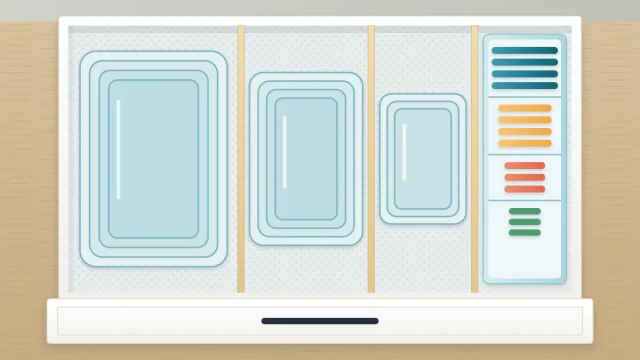
Ways to store cookware, containers, supplies and everyday items so each one has a place you can reach.
Stand sheets and racks on edge, nest pans by shape, gather the tools in one drawer or bin and give the mixer a low home. A calm setup for regular and occasional bakers alike.
Purge the orphans, keep one or two sets that nest and share lids, then store containers in stacks and lids on edge in their own file so nothing tumbles out.
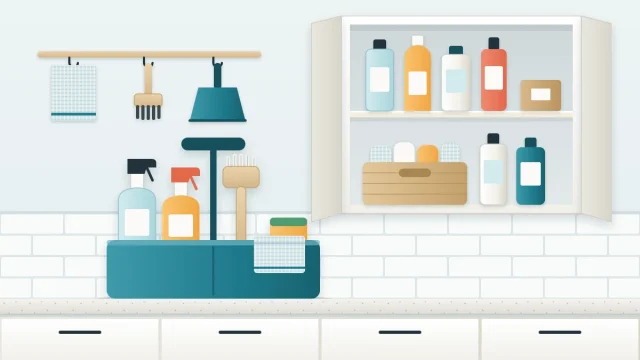
Gather every cleaning product and tool, cut the duplicates, then split a small daily kit at the sink from the backstock stored elsewhere, with clear rules for storing products out of reach.
Where height goes unused in a kitchen and what to add in each spot: risers and baskets inside cabinets, rails and ledges on walls, racks on doors, and the rules that keep heavy things low.
Arranging upper, lower and corner cabinets by how often you use what is inside.
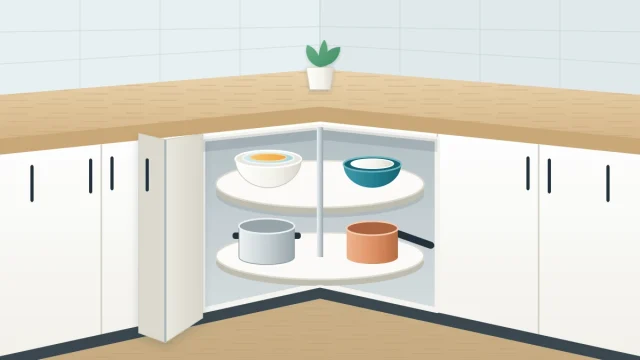
Identify whether you have an L-shaped or a blind corner cabinet, then use placement, handled bins, turntables or a fitted pull-out so nothing disappears at the back.
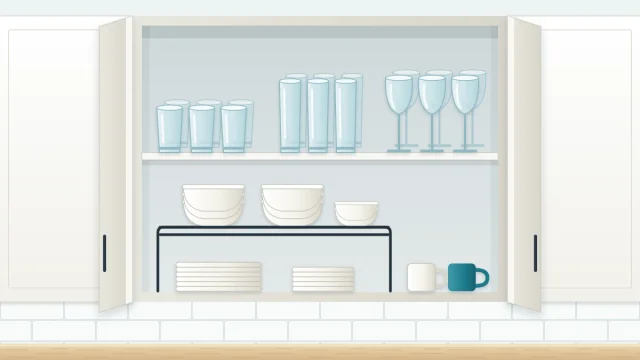
Where plates, bowls, mugs and glasses should live and how to arrange each on the shelf: short stacks by size, glasses in front-to-back rows, and heavy pieces kept low.
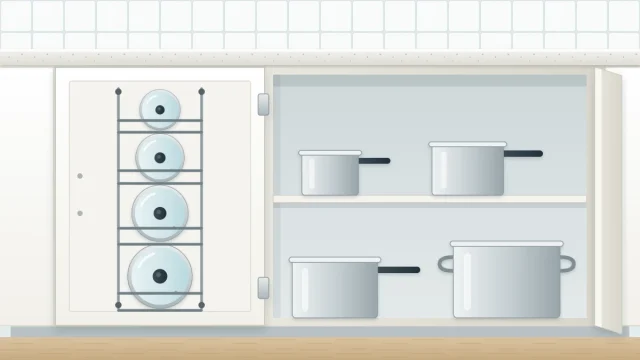
Match every lid to a pot, let go of the orphans, then pick from six ways to store lids on edge, sorted by size and kept right beside the cookware they fit.
Sorting utensils, tools and the catch-all drawer so things stay where you put them.
A catch-all drawer is worth keeping if it has a job and edges. Here is how to empty it, sort what stays, divide it into compartments and set a one-layer limit so it stays useful.
What deep lower drawers are best for and how to stop their contents shifting and burying each other, using deep dividers, pegboards, upright racks and bins, with a table matching contents to dividers.
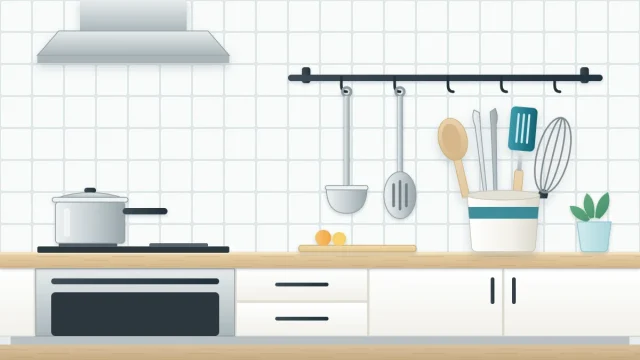
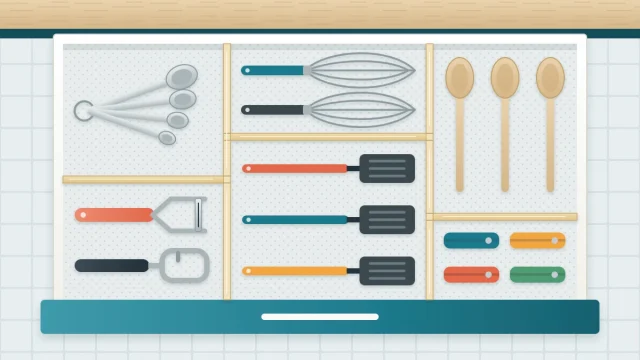
Sort your spatulas, spoons and gadgets into three groups, then compare the three homes for them: a divided drawer, a counter crock and a wall rail, with a mixed setup that suits most kitchens.
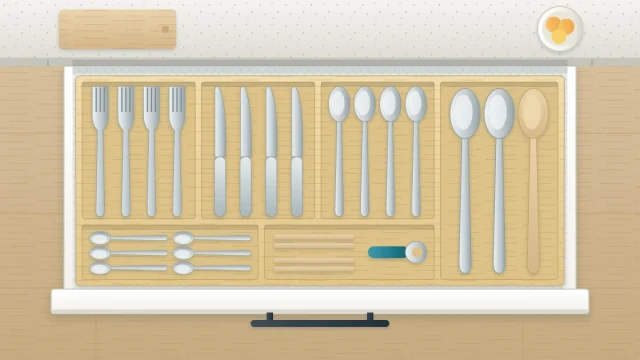
Seven steps to drawers that each have one clear job: sort, assign by location, measure the inside of the box, divide the space, and keep sharp tools covered.
Deciding what stays out, what goes away and how to keep a clear work surface.
Cut the sink rim down to a few daily items, contain them so they drain and dry, and pick a dish-drying setup that matches how much you wash by hand.
Sort your small appliances by how often you use them, then give daily, weekly and occasional machines a matching home, with attachments, cords and manufacturer instructions accounted for.
A simple three-part test for what earns counter space, how to group the keepers into stations, and how to keep the main prep stretch and the area around the stove clear.
Ideas for apartments, galley layouts and kitchens with very few cabinets.
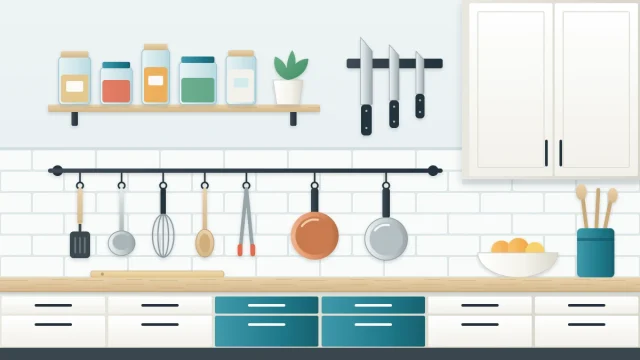
A no-drill toolkit for renters: tension rods, removable adhesive hooks, over-door and magnetic racks, freestanding organizers and furniture, with what each suits and what to check first.
When the cabinets are full even after decluttering, storage has to come from somewhere else. These options use walls, freestanding furniture, appliance sides, doors and nearby rooms.
An eight-part strategy for a small kitchen, in order of effect: own less, move bulky items out, put prime space to work, use height and walls, and keep the counter free for cooking.
A beginner project for odd-sized drawers: measure the inside of the drawer, cut thin wood strips or foam board to length and slot them into a snug grid that lifts out when your needs change.
A small project that helps a whole household put things back: what deserves a label, how to word it so it stays true, which label method suits each surface and where to place it.
Stand sheets and racks on edge, nest pans by shape, gather the tools in one drawer or bin and give the mixer a low home. A calm setup for regular and occasional bakers alike.
A no-drill toolkit for renters: tension rods, removable adhesive hooks, over-door and magnetic racks, freestanding organizers and furniture, with what each suits and what to check first.
When the cabinets are full even after decluttering, storage has to come from somewhere else. These options use walls, freestanding furniture, appliance sides, doors and nearby rooms.
A catch-all drawer is worth keeping if it has a job and edges. Here is how to empty it, sort what stays, divide it into compartments and set a one-layer limit so it stays useful.
Pick the part of the kitchen that bothers you most: a cabinet, a drawer or the countertop. Every guide is free to read, with no sign-up needed.